Golf Cart Acrylic Windshield Cleaner: How I Clean Acrylic Windshields Without Haze, Scratches, or Streaks
When I search for a golf cart acrylic windshield cleaner, I am not looking for something that merely makes the windshield look clean for five minutes, I want a cleaner that keeps acrylic clear, reduces static, prevents streaking, and helps me avoid the fine scratches and cloudy film that show up when the wrong products touch the surface. Acrylic windshields look amazing when they are maintained correctly, but they also punish shortcuts, because acrylic is more sensitive than automotive glass and it reacts badly to harsh chemicals, abrasive towels, and quick wipe downs that grind dust into the panel. In this guide, I walk through how I personally clean acrylic windshields, what I look for in the best cleaner, how I handle pollen, salt air, bug splatter, sunscreen mist, and winter grime, and how I build my cleaning routine into a complete cart care system using the right internal product and category silos like Golf Cart Body And Windshield Cleaner – Grape Scent and the broader Body & Windshield Cleaner lineup.
What Makes Acrylic Windshields Different From Glass
Acrylic is lightweight, impact resistant, and perfect for golf carts, but it is also more prone to micro marring than tempered automotive glass, which means my cleaning approach has to be softer, more methodical, and more consistent. Acrylic can attract dust through static, it can develop a stubborn film from airborne oils and road residue, and it can haze if I accidentally use the wrong chemistry, especially ammonia based cleaners or harsh degreasers that are common in household sprays.
The main acrylic windshield issues I work to prevent
-
Fine scratches from dry wiping or gritty towels
-
Streaking from oily residue and improper evaporation
-
Haze from incompatible cleaners or overspray buildup
-
Static attraction that makes the windshield look dusty again quickly
-
Water spotting from hard water, salt mist, or improper drying
Because of those risks, I treat acrylic windshield care as its own category within my overall golf cart detailing routine, and I always pair windshield cleaning with the rest of the cart surfaces so the whole cart looks cohesive, not clean in one spot and neglected everywhere else.
My Definition of the Best Golf Cart Acrylic Windshield Cleaner
For me, the best golf cart acrylic windshield cleaner is a formula that cleans effectively while staying gentle on acrylic, wipes clean without leaving a greasy film, and supports a streak free finish even in direct light. I also want it to be easy to use for quick maintenance, because a windshield that is cleaned frequently with the right product stays clearer and needs less aggressive effort later.
My personal criteria table for “best” acrylic windshield cleaning performance
| Criteria I Care About | Why It Matters on Acrylic | What I Look For in Real Use |
|---|---|---|
| Acrylic safe chemistry | Acrylic can haze or weaken with harsh chemicals | A cleaner built for cart surfaces |
| Streak free wipe down | Streaks are amplified on clear acrylic | Clean evaporation and low residue |
| Anti film behavior | Film causes glare at night or sunrise | Removes oils and environmental grime |
| Low abrasion process | Acrylic scratches easily | Spray and microfiber method, no scrubbing |
| Works for quick maintenance | Frequent gentle cleaning beats rare heavy cleaning | A product I will actually use often |
This is why I build my windshield routine around a dedicated cart surface solution like Golf Cart Body And Windshield Cleaner – Grape Scent rather than experimenting with random cleaners that might work on glass but are risky on acrylic.
Why I Avoid Household Glass Cleaners on Acrylic Windshields
I have seen too many windshields turn cloudy because someone treated acrylic like kitchen window glass. Many common glass cleaners are not made for acrylic, and some can cause dulling, hazing, or long term discoloration. Even when a household spray does not immediately damage the windshield, it can leave behind residues that attract dust, increase glare, and make the windshield harder to maintain.
The biggest household cleaner problems I avoid
-
Ammonia risk on plastics and acrylic
-
Harsh solvents that can stress the acrylic surface
-
Fragrances and additives that leave streaky residue
-
Paper towel abrasion that creates micro scratches
Instead, I focus on cart specific options and keep my purchases organized inside one ecosystem so every surface has the right chemistry and I do not cross contaminate my cart care routine. If I want to see all surface safe options in one place, I use the Golf Cart Cleaner category as my starting point.
The Cleaning Environments That Test Acrylic the Most
Acrylic windshields behave differently depending on climate, storage, and usage, so I tailor my maintenance to the real conditions the cart faces. I do not need a different product for every environment, but I do need different habits and timing.
Coastal and salt air conditions
Salt mist dries into a film that increases glare, and it also creates water spots that feel like roughness on the acrylic. In these conditions, I clean more often and I never let salt dry on the windshield after a ride.
Pollen season and spring dust
Pollen acts like a sticky powder that holds onto the windshield. If I wipe it dry, it can scratch. During peak pollen, I always spray first, let it dwell briefly, and then wipe gently.
Summer sunscreen and bug splatter
Sunscreen aerosol and insect residue create a greasy film that smears if I use a weak wipe down. This is where a consistent approach with a dedicated windshield cleaner matters, because I want the product to lift oils and remove residue without clouding the acrylic.
Winter storage, grit, and road salt
Winter grit is abrasive, so my main focus becomes reducing friction. I spray more, wipe less aggressively, and use clean microfiber frequently.
My Step by Step Method to Clean an Acrylic Windshield the Right Way
I use a simple method that prioritizes lubrication, gentle removal of debris, and streak free finishing. The sequence matters because acrylic is unforgiving when I skip steps.
Step 1: Pre check and dry dust removal rule
If the windshield looks dusty, I never wipe it dry. I treat dust like sandpaper and I avoid dragging it across acrylic.
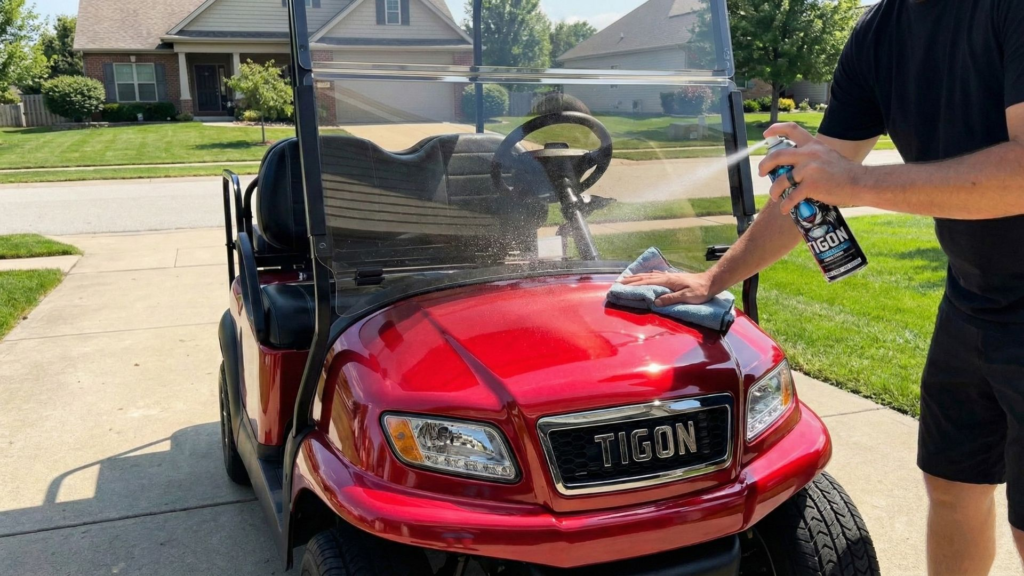
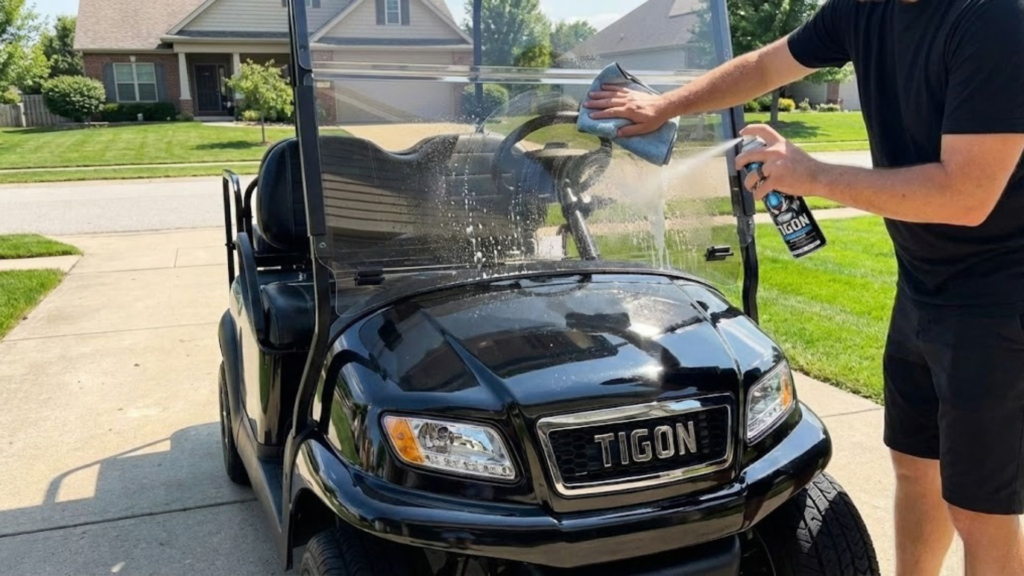
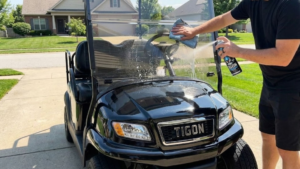
Step 2: Spray the cleaner onto the surface, not the towel
I apply my cleaner directly to the windshield so the solution can encapsulate dirt and reduce friction. My go to for this is Golf Cart Body And Windshield Cleaner – Grape Scent because it fits the exact job: body surfaces and windshields, which keeps my routine consistent across the cart.
Step 3: Let the product dwell briefly
I give the cleaner a short moment to loosen grime, especially for bug residue and oily film. I do not let it dry on the surface, I just let it do its job.
Step 4: Wipe with a clean microfiber using straight lines
I wipe top to bottom or side to side, and I keep the pressure light. I avoid circles when the windshield is gritty because circular motion can create visible swirl patterns in acrylic.
Step 5: Flip towel and buff lightly for clarity
A second dry side of the towel finishes the surface and removes any remaining moisture that can streak.
Step 6: Clean the edges and mounting zones
Acrylic windshields collect grime along edges and hardware, so I finish there carefully with minimal pressure.
My Do and Avoid Table for Acrylic Windshield Cleaning
| Do | Why I Do It | Avoid | Why I Avoid It |
|---|---|---|---|
| Spray first, wipe second | Lubrication reduces scratching | Dry wiping | Creates micro scratches |
| Use clean microfiber | Acrylic is sensitive to grit | Old towels | Hidden debris scratches |
| Wipe in straight lines | Minimizes visible patterning | Heavy scrubbing | Builds haze and marring |
| Clean often | Light maintenance reduces buildup | Waiting months | Requires aggressive effort |
| Use cart specific cleaners | Safer chemistry for plastics | Random glass sprays | Risk of residue or haze |
When I follow these basics, acrylic stays clear longer, and I do not get that annoying foggy look that ruins nighttime visibility and sunrise glare.
How I Build Acrylic Windshield Cleaning Into a Full Cart Care Routine
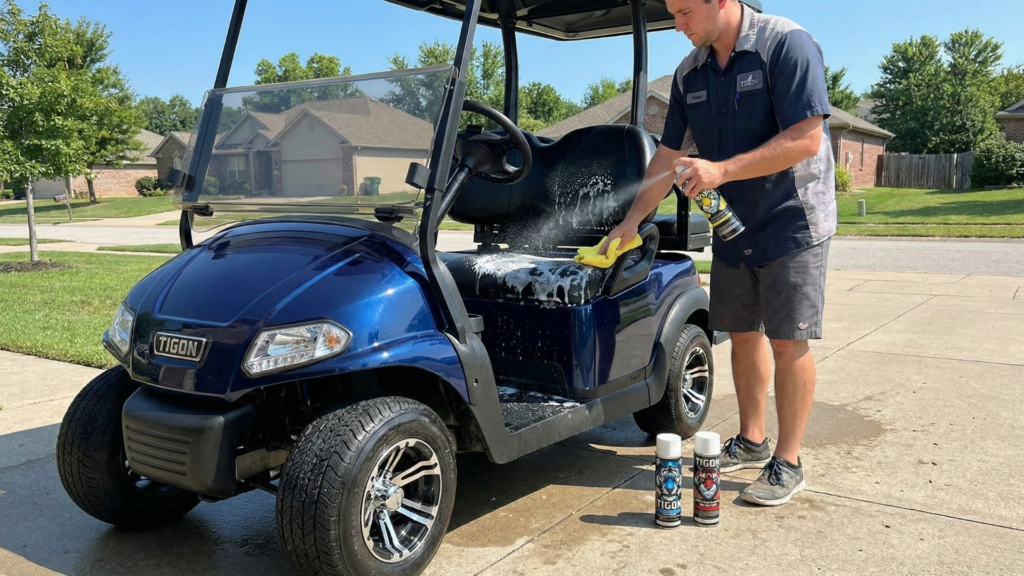
I never treat the windshield as a standalone job, because overspray from seat products or vinyl protectants can drift onto acrylic and cause streaking later. My solution is to clean in a smart order and finish with surface protection where it belongs.
My preferred cleaning order for best overall results
-
Windshield and body cleaning first using Golf Cart Body And Windshield Cleaner – Grape Scent
-
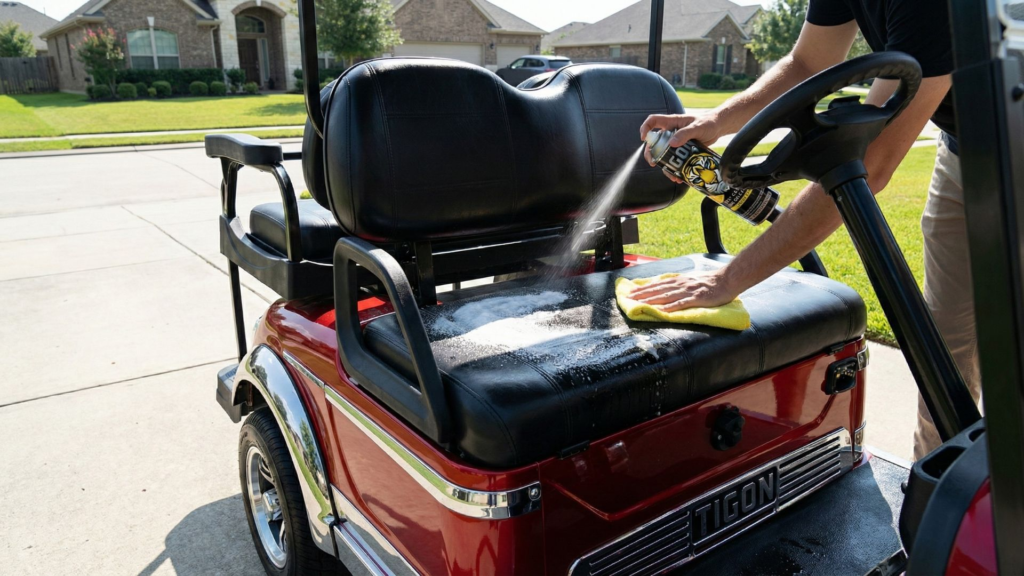
Seats second using Golf Cart Seat Cleaner – Lemon Scent
-
Vinyl and plastic finishing third using Golf Cart Vinyl And Plastic Coating – Watermelon Scent
-
Final touch ups and inspection last
This order helps me avoid re cleaning the windshield after I apply other products. It also helps me keep my results consistent across the cart, so the windshield looks clear, the seats look fresh, and the dash plastics look deep and restored.
The category silos I use to keep my routine organized
-
I shop windshield focused products under Body & Windshield Cleaner
-
I shop seat solutions under Seat Cleaner
-
I shop protectants under Vinyl & Plastic Coating
-
I shop full bundles under Golf Cart Cleaning Kit
-
I browse everything through Golf Cart Cleaner
Why I Prefer a Kit When I Want Consistent Results
When I am maintaining more than one cart, cleaning a cart after a busy weekend, or prepping for an event, I want consistency and speed. That is when I use a bundle like Complete Golf Cart Cleaning Kit -12 Pack Bundle because it keeps my routine streamlined and it ensures I always have the correct product for each surface.
What a full kit solves for me
-
I stop guessing which cleaner is safe for which surface
-
I avoid mixing brands that may leave incompatible residues
-
I keep a repeatable system that anyone can follow
-
I reduce downtime and clean faster with better results
If I am managing a cart fleet, a rental operation, or even just multiple household carts, a dedicated kit category like Golf Cart Cleaning Kit makes the maintenance system scalable.
The Most Common Acrylic Windshield Problems and How I Fix Them
Acrylic windshields usually get in trouble for predictable reasons. I fix them by changing technique first, and then adjusting frequency.
Problem 1: Streaks that show in sunlight
When streaks show under sunlight, it usually means residue. I use a cleaner designed for cart surfaces and I buff with a clean towel side, not the same damp side I used for the initial wipe. I also make sure I am not using too much product, because excess can smear.
Problem 2: Haze that never fully disappears
Haze can come from micro scratches, chemical incompatibility, or years of residue. My first response is to stop using any unknown cleaners and return to a consistent system using windshield safe products from Body & Windshield Cleaner. I also increase cleaning frequency so I avoid heavy scrubbing.
Problem 3: Windshield looks dusty again right after cleaning
This can be static and airborne dust. I keep my towels clean, I avoid cheap paper products, and I use a repeatable light maintenance process instead of overworking the surface.
Problem 4: Water spots after rain or washing
Water spots come from minerals and drying patterns. I wipe dry gently after cleaning and I do not let water air dry on acrylic when I can avoid it.
How Often I Clean My Acrylic Windshield
I do not rely on a single schedule, I base frequency on use and environment, but I do keep a simple guideline that keeps acrylic clear without overworking it.
Acrylic windshield maintenance frequency table
| Cart Usage | Typical Environment | How Often I Clean the Windshield |
|---|---|---|
| Daily use | Neighborhood, community roads | Weekly light clean |
| Weekend use | Mixed use | Every 2 weeks |
| Coastal use | Salt air, ocean mist | After each outing |
| Campground use | Dust, pollen, trail grit | Weekly or after dusty rides |
| Event prep | Shows, meets, photos | Same day quick clean |
If I want cleaning to be faster and more predictable, I keep my supplies bundled and ready through options like Complete Golf Cart Cleaning Kit -12 Pack Bundle.
My Acrylic Windshield Cleaning Checklist
Quick checklist I follow every time
-
I inspect the windshield for dust and grit before wiping
-
I spray the surface using Golf Cart Body And Windshield Cleaner – Grape Scent
-
I wipe gently with clean microfiber, using straight strokes
-
I flip towel and buff for clarity and glare reduction
-
I clean edges and lower corners where grime builds
-
I avoid overspray from seat or protectant products
-
I finish the rest of the cart using Golf Cart Seat Cleaner – Lemon Scent and Golf Cart Vinyl And Plastic Coating – Watermelon Scent so the whole cart looks uniform
The Interior Link Silo Strategy I Use to Rank for Windshield Cleaner Searches
When I publish windshield focused content, I treat it like a central hub in a broader cleaning ecosystem. I link from the windshield topic outward to the supporting categories and product pages, and I link back from other cleaning topics into the windshield hub. This makes the site structure clearer to readers and search engines, and it improves topical authority around cart cleaning.
The internal links I always include in a windshield focused blog
-
For windshield and exterior cleaning, I use Body & Windshield Cleaner and the featured product Golf Cart Body And Windshield Cleaner – Grape Scent
-
For seat care that supports a clean cabin, I link to Seat Cleaner and Golf Cart Seat Cleaner – Lemon Scent
-
For dash and trim finishing, I link to Vinyl & Plastic Coating and Golf Cart Vinyl And Plastic Coating – Watermelon Scent
-
For complete systems, I link to Golf Cart Cleaning Kit and Complete Golf Cart Cleaning Kit -12 Pack Bundle
-
For the full catalog overview, I link to Golf Cart Cleaner
This structure keeps the content tightly themed, which supports ranking for terms like golf cart acrylic windshield cleaner, best golf cart windshield cleaner, streak free cart windshield spray, and acrylic windshield cleaning products.
People Also Ask Style Questions I Answer in This Blog
What is the best cleaner for an acrylic golf cart windshield
For my routine, the best approach is a cart specific cleaner that is safe for both the body and the windshield, which is why I use Golf Cart Body And Windshield Cleaner – Grape Scent and I keep related options organized through the Body & Windshield Cleaner category.
Can I use glass cleaner on an acrylic windshield
I avoid it, because many glass cleaners are formulated for glass and can include chemicals that are not ideal for acrylic, plus they often leave residues that cause streaking and dust attraction.
How do I stop streaks on my golf cart windshield
I stop streaks by using a surface safe product, wiping with clean microfiber, buffing with a dry side of the towel, and avoiding overspray from other protectants that do not belong on the windshield.
How do I clean bug splatter off an acrylic windshield
I spray first, let the cleaner dwell briefly, and wipe gently without scrubbing. If the residue is heavy, I repeat the process rather than applying pressure that can scratch acrylic.
Why does my windshield look cloudy
Cloudiness can come from micro scratching, residue buildup, or incompatible cleaners. I return to a consistent, gentle routine using products designed for cart surfaces, and I avoid anything harsh or unknown.
My Recommended Product Path for a Complete Clean Cart, Not Just a Clean Windshield
If I am serious about keeping the windshield clear, I also keep the rest of the cart clean, because a clean interior reduces airborne dust, a protected dash reduces haze from off gassing residue, and clean seats reduce oily film that ends up on the windshield.
My recommended path
-
Windshield and exterior: Golf Cart Body And Windshield Cleaner – Grape Scent
-
Vinyl and plastic: Golf Cart Vinyl And Plastic Coating – Watermelon Scent
-
All in one system: Complete Golf Cart Cleaning Kit -12 Pack Bundle
If I want to browse each section by intent, I go through Golf Cart Cleaner and then drill down into Body & Windshield Cleaner, Seat Cleaner, Vinyl & Plastic Coating, and Golf Cart Cleaning Kit.
Final Thoughts: My Best Practice for Acrylic Windshield Clarity
The best golf cart acrylic windshield cleaner is the one that I can use frequently, safely, and consistently without risking haze, streaks, or scratches, and the most important part is the method I use along with the product. I keep acrylic clear by never dry wiping, always using clean microfiber, cleaning lightly and often, and anchoring my routine around cart specific solutions like Golf Cart Body And Windshield Cleaner – Grape Scent with a complete supporting system that includes Golf Cart Seat Cleaner – Lemon Scent, Golf Cart Vinyl And Plastic Coating – Watermelon Scent, and the ready to run Complete Golf Cart Cleaning Kit -12 Pack Bundle.